Why Choose PLB Duct Pipes for Modern Telecom Networks?
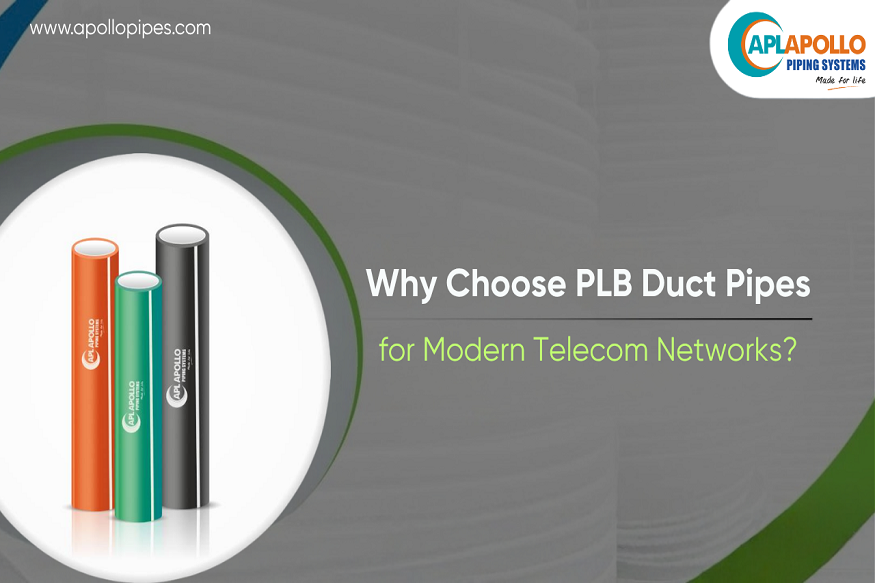
Modern communication networks depend on reliable fibre-optic and cable infrastructure. The expansion of broadband, Fibre-to-the-Home (FTTH), 5G infrastructure, data networks, and digital services has increased the need for protected and well-managed cable routes. PLB duct pipes provide a dedicated pathway for optical-fibre and communication cables, particularly in underground installations. By separating cables from surrounding soil and external conditions, telecom ducting can help simplify installation, routing, protection, and future network management.
What Are PLB Duct Pipes?
PLB duct pipes are specialised telecom conduits designed to provide a protected pathway for optical-fibre and communication cables, particularly in underground networks. PLB commonly refers to permanently lubricated ducting, where the inner surface is designed to reduce friction during cable insertion. This makes the ducts suitable for fibre cable installation across trenches, roads, utility corridors, and other telecom infrastructure environments.
Unlike a cable simply buried underground, a duct creates a defined route around the cable. This can provide additional protection from environmental and installation-related stresses while supporting organised cable deployment and maintenance.
Why Are PLB Duct Pipes Used in Telecom Networks?
PLB duct pipes are used because modern telecom cables require a protected and manageable installation pathway. Key reasons include:
- Cable protection: The duct provides a physical barrier around optical-fibre and communication cables.
- Controlled cable routing: Ducts establish a defined route through underground telecom networks.
- Efficient cable installation: A low-friction internal pathway can make cable insertion more manageable.
- Network expansion: Ducted infrastructure can support planned additions, replacements, or upgrades where the installation design allows.
- Underground suitability: Telecom duct pipes can be installed in trenches and other underground routes.
- Reduced installation risk: Proper ducting helps separate delicate fibre cables from direct contact with surrounding soil and construction activity.
- Infrastructure organisation: Ducts help create a structured pathway between network nodes, communication hubs, distribution points, and local connections.
These characteristics are particularly relevant when deploying fibre-optic networks across urban, suburban, and rural environments.
Key Advantages of PLB Duct Pipes
1. Protection of Optical-Fibre Cables
Optical-fibre cables are designed to transmit large volumes of data but still require appropriate installation practices. PLB ducting provides a protective conduit around the cable, helping shield it from environmental exposure and physical stresses associated with underground installation.
2. Low-Friction Cable Pathway
Cable installation can be affected by friction between the cable and the internal duct surface. Permanently lubricated duct designs address this issue by providing a smoother internal pathway. This is particularly useful when optical-fibre cables need to be routed through longer or more complex duct sections.
3. Flexible Network Routing
Telecom infrastructure rarely follows a simple straight path. Routes may pass beneath roads, sidewalks, open trenches, or developed areas. HDPE-based ducting can provide a practical solution for establishing cable pathways in different installation environments, subject to the project’s engineering and installation requirements.
4. Easier Network Management
A properly designed duct network can make future cable work more organised. Depending on the network design, ducts can facilitate cable installation, replacement, maintenance, and expansion without requiring the entire underground route to be redesigned.
What Should You Consider When Choosing PLB Duct Pipes?
Selecting telecom cable ducting requires more than checking the nominal size. Project teams should evaluate several factors.
Material quality: HDPE is widely used for telecom duct applications because of its combination of strength, flexibility, and resistance to environmental stresses.
Dimensional consistency: Consistent dimensions and wall geometry are important for reliable joining, cable installation, and compatibility with associated components.
Internal characteristics: For fibre cable installation, the internal surface is important because friction can affect the effort and method required to install cables.
Mechanical properties: The selected duct should be appropriate for the expected installation environment, including underground conditions and external loading.
Installation method: Consider whether the project involves trench installation, road crossings, pathways beneath sidewalks, or another route. Duct characteristics should match the proposed installation technique.
Standards and specifications: Project owners should check applicable technical standards, specifications, and tender requirements before procurement.
Manufacturer consistency: Reliable manufacturing processes, quality control, product traceability, and availability of technical documentation can be important for large telecom infrastructure projects.
PLB Duct Pipes and the Future of Telecom Infrastructure
The continued expansion of FTTH, broadband infrastructure, optical-fibre networks, and data connectivity is increasing the importance of organised underground cable infrastructure. PLB ducting can form part of this infrastructure by providing protected routes for fibre and communication cables.
It is also relevant to 5G infrastructure, where fibre backhaul and other wired connectivity form an important part of network architecture. In smart-city projects and expanding urban networks, structured cable ducting can help telecom planners establish routes that can be managed as network requirements evolve.
The suitability of any duct system ultimately depends on project design, cable type, installation conditions, applicable standards, and engineering requirements. PLB duct pipes should therefore be selected as part of an overall telecom infrastructure plan rather than as an isolated component.
APL Apollo PLB Duct Pipes
APL Apollo’s PLB Duct Pipes are designed for telecom and data-network applications, including protecting and routing optical-fibre cables through underground trenches, under roads, and between communication hubs and local branch networks. According to APL Apollo, these ducts are manufactured from high-density polyethylene and use permanent lubrication on the inner surface to provide a low-friction pathway for optical-fibre or copper communication cables. The company states that the ducts are resistant to environmental stress, UV radiation, and chemical exposure, and that virgin-quality raw materials are used in manufacturing. The listed sizes are 32/26 mm, 40/33 mm, and 50/42 mm, with colours including red, green, orange, brown, blue, and black, or customer-specified colours. The listed coil lengths are 1000, 500, and 200 metres. APL Apollo also states that its HDPE telecom ducts meet the requirements of TEC specifications and IS 4984-1995.
Frequently Asked Questions
1. What are PLB duct pipes used for?
PLB duct pipes are primarily used to protect and route optical-fibre and other communication cables. They are commonly used in underground telecom and data networks, including routes through trenches, roads, and pathways connecting communication hubs and local network branches.
2. What are the advantages of PLB duct pipes for telecom networks?
PLB duct pipes provide a dedicated and protected pathway for communication cables. Their permanently lubricated internal surface can reduce friction during cable insertion, while HDPE construction can provide useful mechanical and environmental resistance for underground telecom applications.
3. Are PLB duct pipes suitable for optical-fibre cables?
Yes. PLB ducts are specifically used for optical-fibre cable installation. Their purpose is to provide a protected conduit and, in permanently lubricated designs, a low-friction internal pathway that supports fibre cable insertion.
4. What should you consider when selecting PLB duct pipes?
Consider material quality, dimensional consistency, internal friction characteristics, mechanical properties, installation conditions, cable compatibility, applicable technical standards, and manufacturer quality. Project-specific engineering and tender requirements should also be checked before selection.
5. How do PLB duct pipes support FTTH infrastructure?
FTTH networks require extensive optical-fibre deployment between network points and individual service areas. PLB ducting can provide protected underground pathways for these fibre cables, helping organise routes and support installation and future network maintenance where the system has been designed accordingly.